
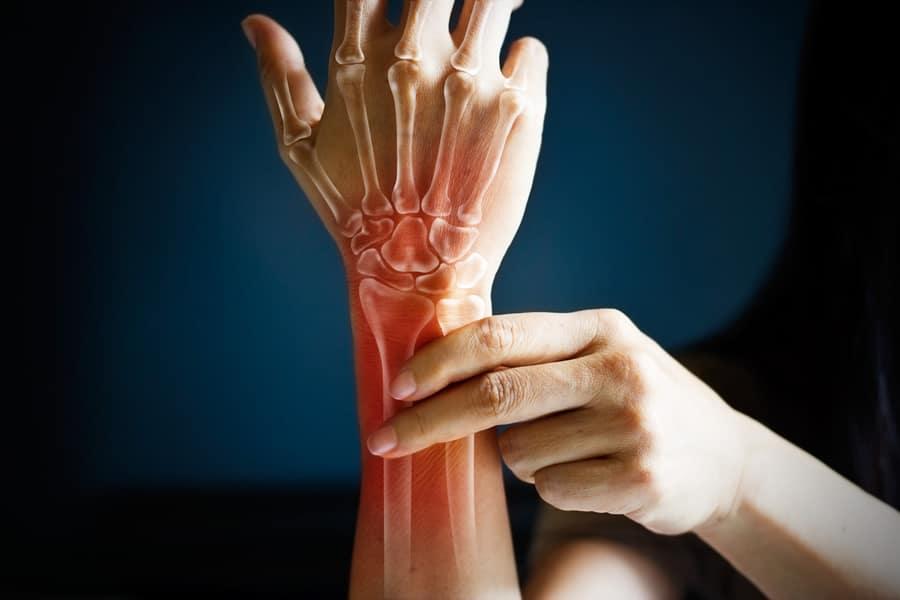
Steroid & Cortisone Injections for Hand Pain, Wrist Pain, Tendonitis & Carpal Tunnel Wakefield & Sheffield
Steroid injections for wrist pain can offer effective relief from common conditions caused by repetitive use and joint inflammation.
Pain affecting the wrist and hand is common in jobs with repetitive movements. Joint degeneration, particularly in the thumb is a typical ageing problem. Trigger finger and wrist extensor tendinopathy frequently occur when the person uses hand held tools, drills, compression equipment and scissors for example.
Changes in a persons blood, as occurs in rhuematological pathology can often show up in the in the hands; nodules, inflamed joints and joint erosion are all potential problems.
We often take our hands for guaranteed until something goes wrong. When irritation, damage and inflammation affect our hands and wrist even the simplist of daily task is problematic.
For a diagnosis and specific treatment for your condition please book an appointment at the Injection Clinic.

Osteoarthritis of the thumb
Poor old thumb
Thumb joint degeneration is unfortunately very common. Throughout our lives we constantly use our special power of opposable thumbs. As a consequence they can show signs of wear and tear, inflammation and then degeneration.
Small Joint, Big Pain
The pain from an arthritic thumb joint can be severe and often prevents normal use of pens/ zips and scissors etc.
Joint ‘crepitus’ (creaking / grinding) of the joint is felt and sometimes heard.
Overall, the condition for a small joint can provide a significant loss of function and pain. Please see treatment opposite for ways in which the condition can be managed.
Injection and Rest
Steroid injections for thumb osteoarthritis
The most common treatment for thumb joint degeneration is rest, gentle mobilisation and guided injections of cortico-steroid.
Long term health
For maintenance of the joint injections of Hyaluronic acid can add lubrication and minimise joint friction.
Gentle massage into the thumb muscle (Thenar eminence) can ease some tension and the use of strapping when physical jobs just can’t be avoided, are supplementary treatments to provide relief and support.
Surgery: When all else fails
In extreme case’s the bone at the base of the thumb is surgically removed (Trapeziodectomy). As discussed previously, a focus on best mechanics and best chemistry should always direct treatment and if the joint surfaces are severely worn then removable is a valid option.
Book your appointment at InjectionClinic to confirm diagnosis and commence treatment.
Trigger Finger
Finger locking
free movement of our fingers is taken for granted until they start the lock in a closed position. This can often occur first thing in the morning and might affect the person for the rest of day.
Sometimes it gets so bad that the finger locks down and needs assistance to re-straighten.
Small Joint, big irritation and pain
The pain from a trigger finger varies, but can be severe and damaging to persons quality of life.
The finger or thumb locks down because the tendon fails to slide and glide through a series of small tunnels (pulleys) that hold the tendon next to the bone.
It is typical that the strength of the flexor’s will pull the tendon through the tunnels but the weaker extensor’s can not pull the finger back straight.
Injection and gentle movement
Injection for Trigger Finger
The most common treatment for trigger finger is to inject the tendon where it passes under the main tunnel (pulley) at the base of the finger.
If this fails to provide a good outcome it is often repeated and if this still fails then surgical release is considered.
Modification of Activity
Along side the correction of tendon movement the potential causative factors need to be addressed.
Sometimes the repetition of work related activities can be a causative factor. There maybe opportunities to change how the work is done or change the equipment used. The width of handles, pressure required to pull a mechanical trigger or limiting the amount of time performing one single task are all factors that need to be reviewed.


Carpal Tunnel Syndrome
Finger tingling irritation
Carpal Tunnel Syndrome (CTS) is a common problem that affects the median nerve in the wrist. This nerve delivers sensory information from the first four fingers.
When the nerve is compressed / inflamed the messages are interrupted and the feeling we have is changed.
The tingling can be quite painful and can awaken a person from their sleep.
If you find yourself shaking your hand or placing it on a cold surface to reduce the symptoms then you may have this condition.
Further tests include nerve conduction studies.
Causative factors of nerve compression
The most common cause is thickening and inflammation of the finger flexor tendons. These eight tendon pass through the wrist in the same space as the median nerve. Therefore if they become bigger, the space is decreased and the nerve gets compressed.
Other causative factors can be changes to the wrist bones. Joint degeneration can reduce the carpal tunnel space.
Transient CTS
Sometimes CTS is transient, such as with pregnancy or a particular job. When the pregnancy or job has been completed symptoms often self resolve.
Urgent action needed
In a few cases, if the median nerve is severely compressed then the motor function of the nerve can become damaged. The median nerve helps recruit the muscle strength around the base of the thumb. If you notice any muscle wastage in this area then you must seek medical attention. This is not life threatening but is thumb function threatening.
Injection and rest
Wrist injections for carpal tunnel syndrome
The most common treatment for Carpal Tunnel Syndrome is to inject the carpal tunnel with a steroid and then avoid repetitive grip activity whilst the inflammation settles down.
Resting splints can be used at night time to ensure the joint is held in an aligned position. (this is just a basic £5-7 wrist splint).
Injection Clinic strongly recommends the injection is administered under guidance.
The problem is not going away
If symptoms fail to ease despite rest and injection then carpal tunnel release surgery needs to be considered.
This is a simple day case procedure and recovery is around 4 weeks; simply to allow the tissue to heal and avoid any risk of infection.
DeQuervains Tenosynovitis
Tendon irritation
DeQuervains tenosynovitis relates to an inflammatory condition affecting a tendon that helps move the thumb away from the hand and the sideways movement of the hand across the wrist. The tendon is named Abductor Pollucis Longus. It is a common problem affecting people who use scissors or have a repetitious production job. Chefs can also be affected in the hand they use for lifting pans as too can nursery workers who are regularly caring from baby’s.
The affected tendon makes most normal activities difficult and painful. Many individuals loss time from work because of this condition.
Diagnosis is confirmed with clinical tests and ultrasound scan. Once diagnosed most individuals have an excellent improvement with guided steroid injections.
Injection, rest and modification of activities
De Quervain's Tenosynovitis Injection
The most common treatment for DeQuervains Tenosynovitis is to inject the tendon sheath with a cortico-steroid.
When performed under guidance the expansion of the sheath away from the tendon can be seen. Both the anti-inflammatory action of the medication and the separation of the tendon away from its sheath, helps to establish more normal movement.
Rest and modification of activity is also essential. Changes to the width of pan handles, the type of scissors used and recognition of what activities must be avoided are all key to gaining successful outcomes.
The problem fails to respond to injection
If symptoms fail to ease despite rest and injection then surgical tendon release can be considered.
Modification and rest still need to be implemented.
