Corticosteroid Injections for Joint, Muscle & Nerve Pain Relief
Cortico-steroids are a powerful anti-inflammatory drugs. They work by suppressing the inflammatory response that is associated with joint and tissue irritation and degenerative changes.
They Do Work
It is not however uncommon to hear people, including some medical professionals claim that they don’t work. They do. The trick to making sure they do relies on accurate diagnosis and an accurate injection.
Not all pain is from inflammation
Not all experiences of pain are generated by inflammation. In this situation cortico-steroid injections have little benefit.
Not all injections are guided
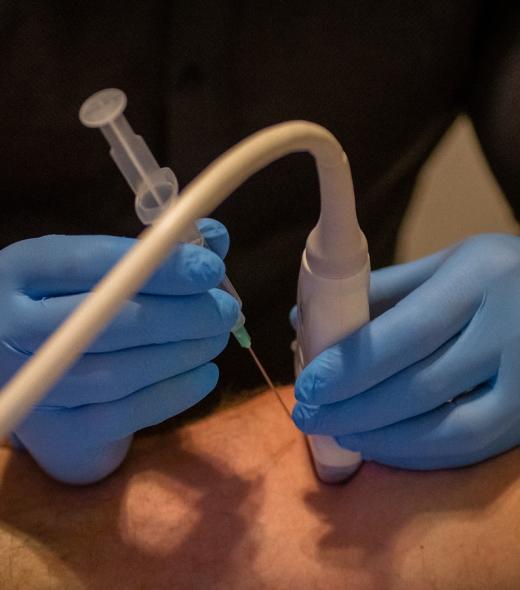
Further more, not all injections are administered under guidance; blind (un-guided) injections can miss the target area of inflammation. This can minimise their effect on the inflamed tissue and also has the potential to increase the risk of tendon damage and fat atrophy.
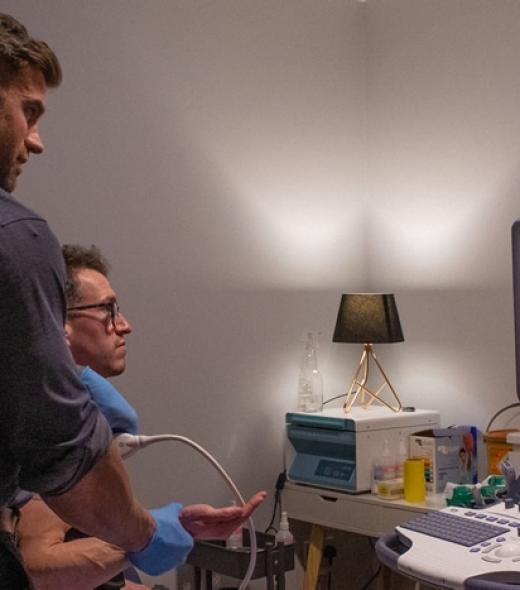
Guided injections therefore ensure the medication is administered directly at the target tissues. This can be inside a joint or within fluid sacs such as bursa. Sometimes guided injections are used to dilate specific tissues and /or separate one layer of tissue away from another. These are referred to as high volume injections.
Please note: even with guided injections there are still risks with the use of steroid injections. Please see the section on side effects.
Ideal Conditions Treated with a Corticosteroid Injection
When are Corticosteroid Injections Recommended
Cortico-steroids are an effective medication when administered directly into or around inflamed tissue.
They work well to settle the inflammatory pain in degenerative joints and bursitis.
They should not be injected directly into tendons, but can be placed into tendon sheaths, bursa, joint capsules, muscles and connective tissue.
This type of injection is not used in acute injuries, as the healing process needs to flourish. In chronic conditions, when inflammation is part of the problem, the medication is very effective.
Duration of Relief After a Corticosteroid Injection
How Long Do Corticosteroid Injections Last?
On average about 3 months, but this is variable.
The technical make up of the medication gives the drug a half life of 5 weeks.
This means, if an injection of 40mg is administered then in 5 weeks time there will be half left (20mg); and so on.
How much medication is needed to keep an inflammatory response suppressed is variable. If the joint mechanics are good then once the inflammation is suppressed it will stay settled for an extended time. If the mechanics are poor, then the inflammation will return.
We use cookies to ensure that we give you the best experience on our website. If you continue to use this site we will assume that you are happy with it.